News
2026-07-14
2026-07-14
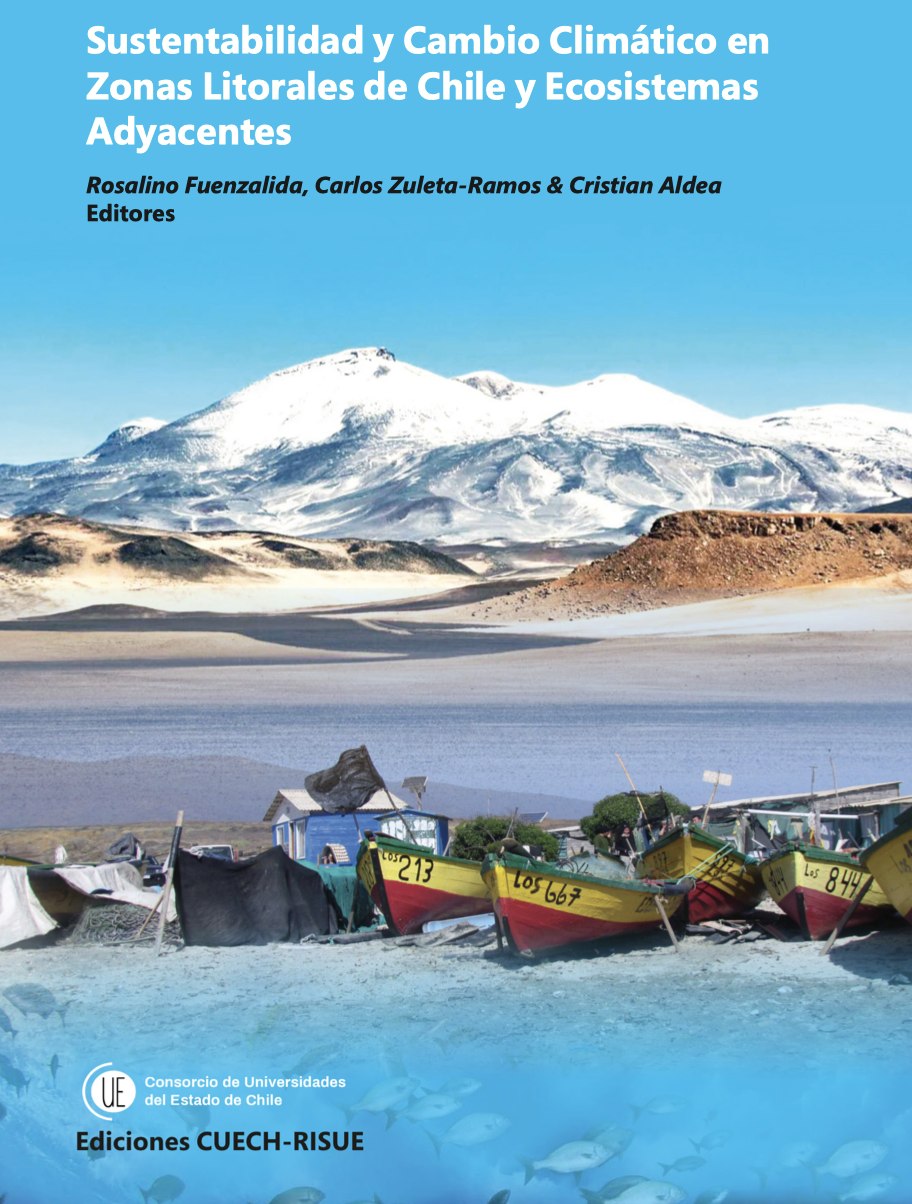
The book "Sustentabilidad y Cambio Climático en Zonas Litorales de Chile y Ecosistemas Adyacentes" ("Sustainability and Climate Change in the Coastal Zones of Chile and Adjacent Ecosystems") brings together a broad synthesis of the scientific knowledge available on the country's coastal ecosystems, their transformations, and the challenges they face amid global change. The volume was edited by Rosalino Fuenzalida, Carlos Zuleta-Ramos, and Cristian Aldea, and published in 2026 by Ediciones CUECH-RISUE.
Across 20 chapters and more than 600 pages, specialists from various universities and research centers address topics such as climate and oceanographic trends, marine biodiversity, coastal wetlands, pollution, coastal urbanization, marine protected areas, and climate change adaptation. The book aims to bring this knowledge to students, professionals, environmental managers, and communities interested in the conservation of the biocultural heritage of Chile's coasts.
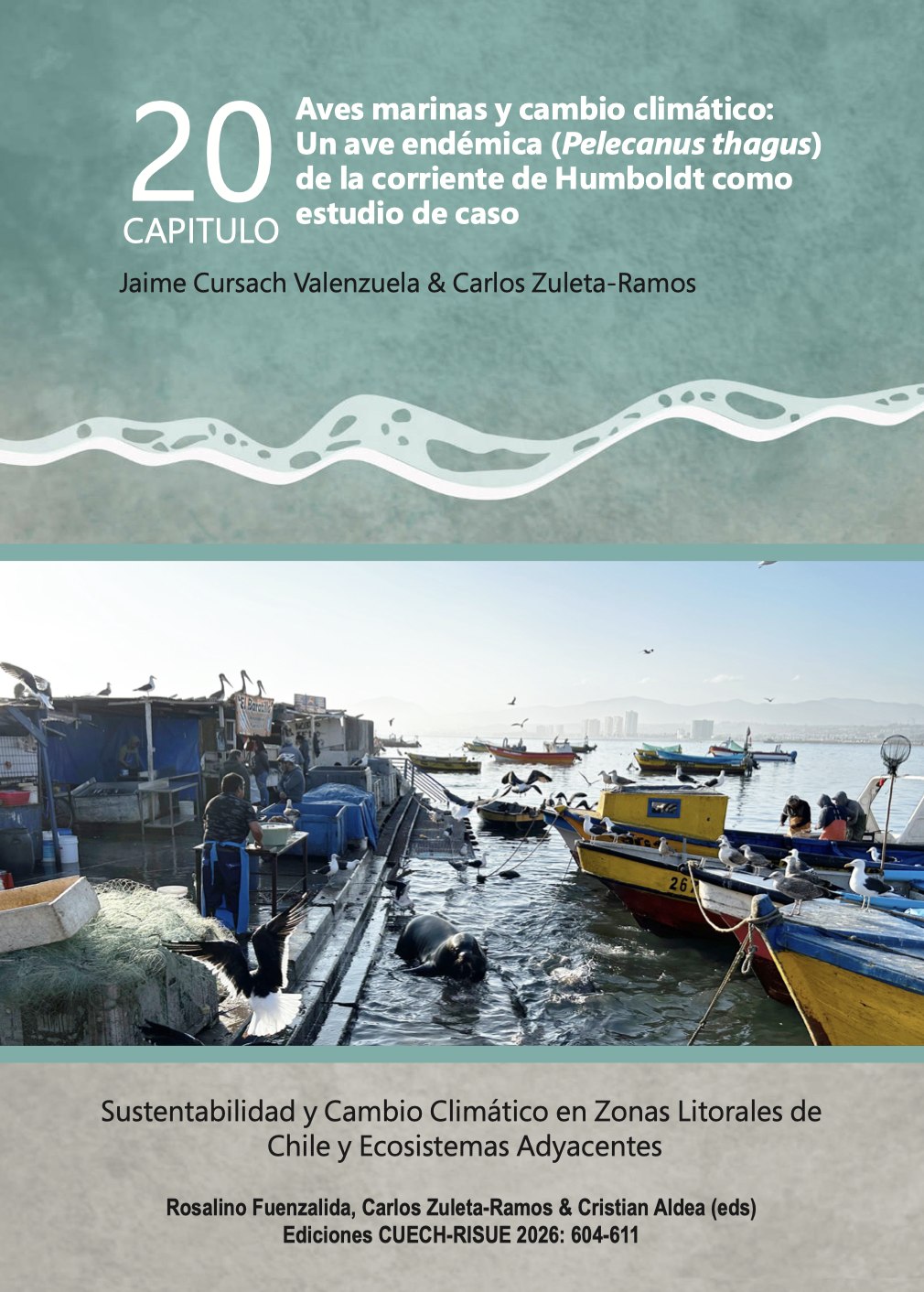
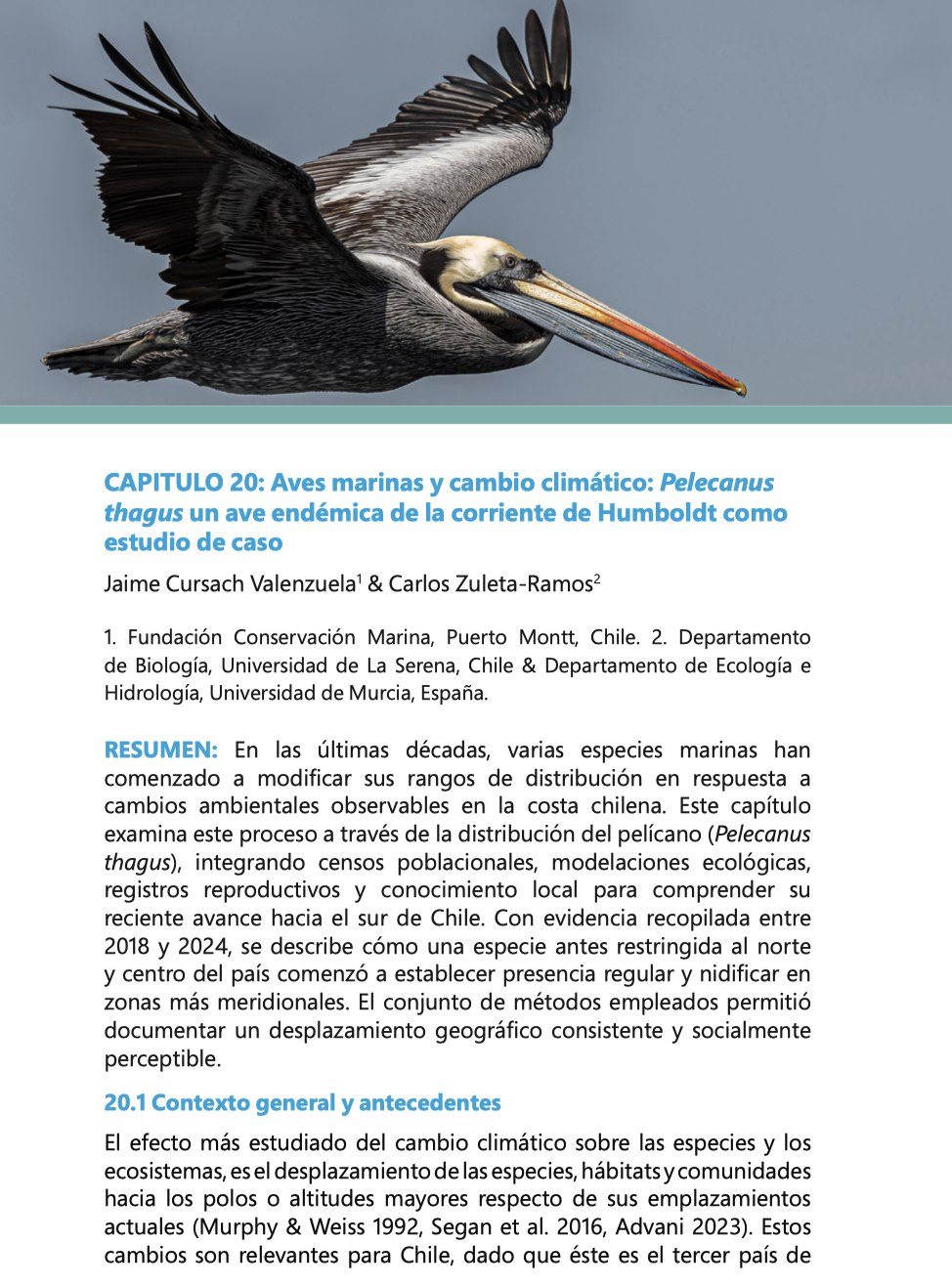
Fundación Conservación Marina contributes to this publication through Dr. Jaime Cursach, FCM's Scientific Director, who co-authored chapter 20 with Carlos Zuleta-Ramos, "Aves marinas y cambio climático: Pelecanus thagus, un ave endémica de la corriente de Humboldt como estudio de caso" ("Seabirds and Climate Change: Pelecanus thagus, a Bird Endemic to the Humboldt Current as a Case Study"). The chapter draws on population censuses, more than 4,800 georeferenced records, ecological modeling, breeding records, and local knowledge to analyze the Peruvian pelican's expansion into southern Chile.
Among its key findings, chapter 20 highlights a breeding record documented in 2022 on the Farallones de Carelmapu islets, at 41 degrees south latitude, where 114 chicks and 39 fledglings were recorded. This finding confirmed that the species was not only appearing more frequently in the south but was already breeding in more southerly areas. The research also included interviews with 77 artisanal fishers, whose observations matched the scientific models and records regarding the increase of pelicans along the southern coasts.
FCM's contribution to this volume underscores the importance of integrating scientific monitoring, ecological modeling, and local knowledge to understand the changes already underway in marine-coastal ecosystems. The case of the pelican shows that species' responses to climate change can emerge quickly and raise new questions about ecological interactions, conservation, and coastal management.
The publication was developed as a contribution of the Sustainability Research Network of Chile's State Universities and was funded by the project Sistema Articulado de Investigación en Cambio Climático y Sustentabilidad de Zonas Costeras de Chile (Coordinated Research System on Climate Change and Sustainability of Chile's Coastal Zones), from the Ministry of Education.