News
2026-10-28
2026-10-28
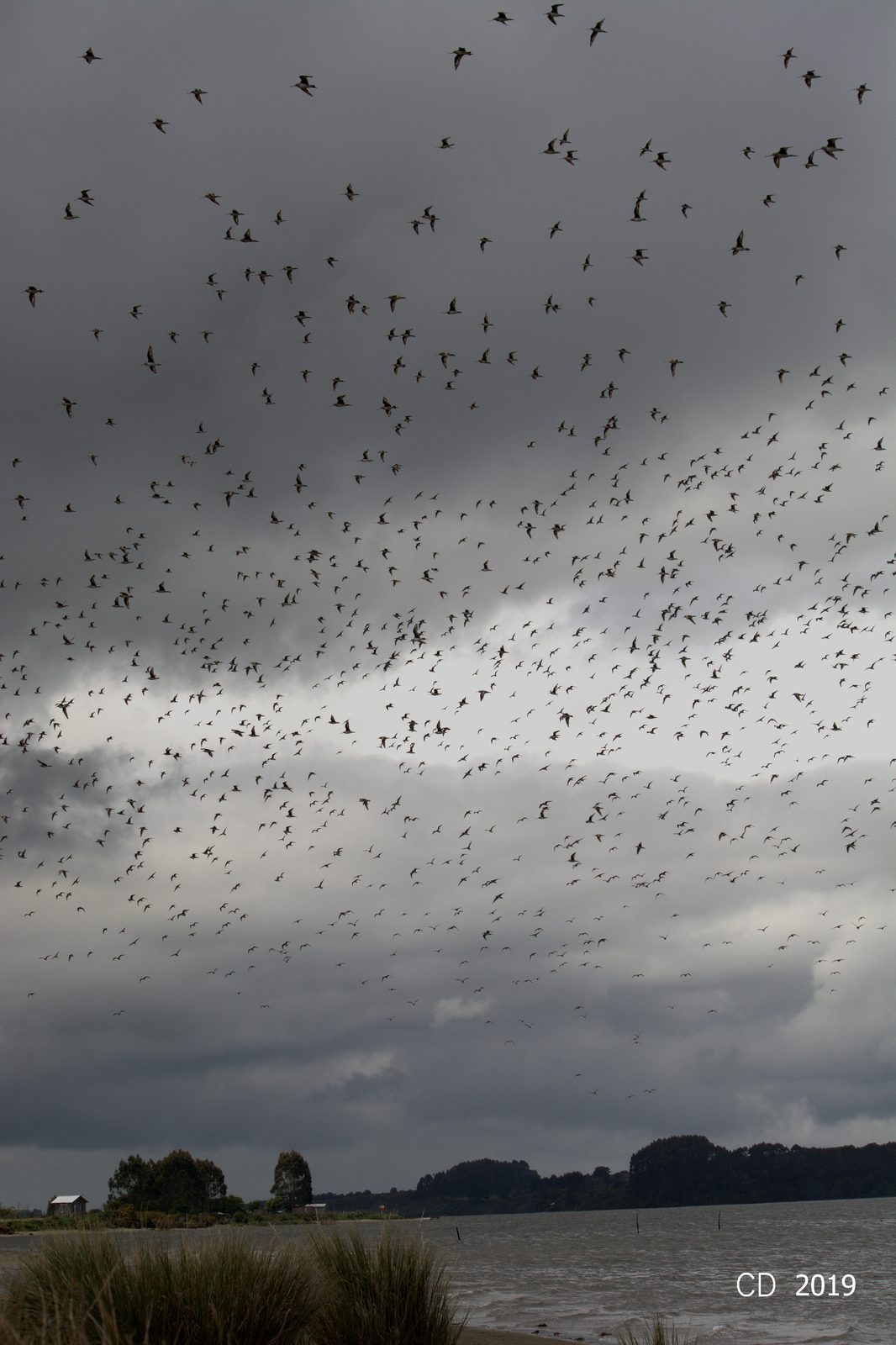
After an extraordinary migration from their breeding grounds in Alaska, large flocks of Hudsonian Godwits have returned to the wetlands of Chiloé. The Maullín–Chiloé migratory bird corridor receives an estimated population of around 25,000 individuals, making it one of the most important areas for the conservation of this species along the American Pacific.
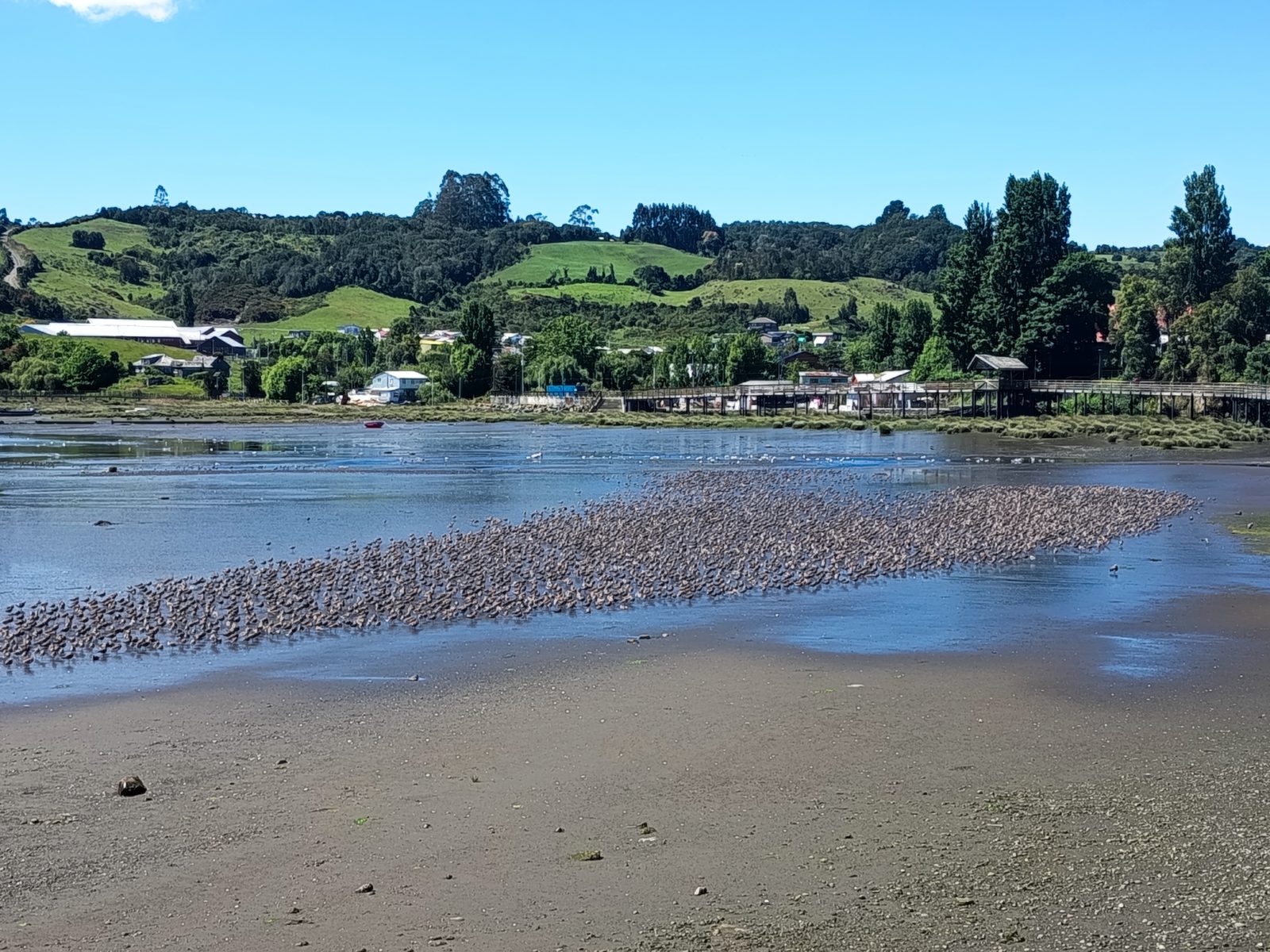
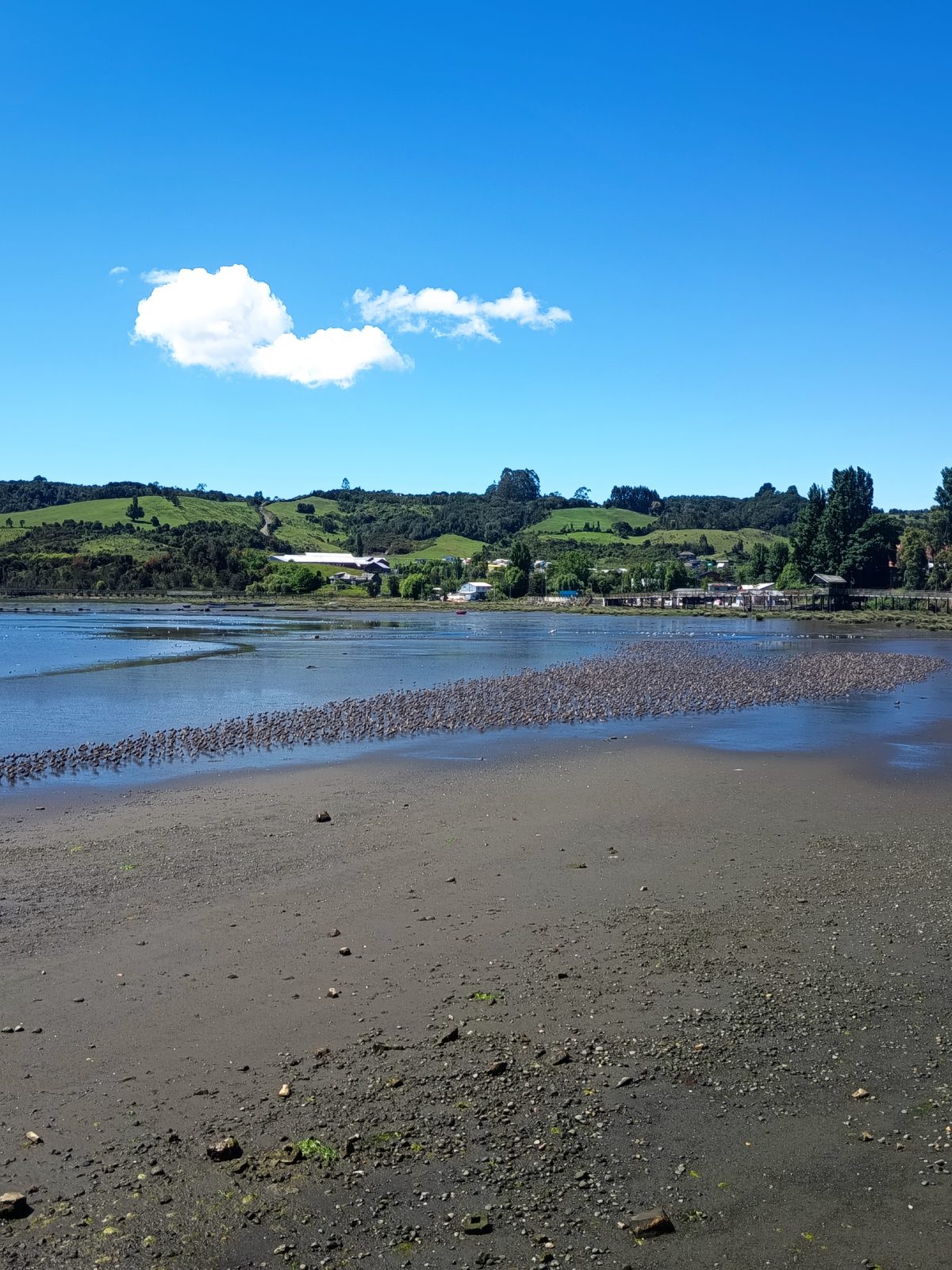
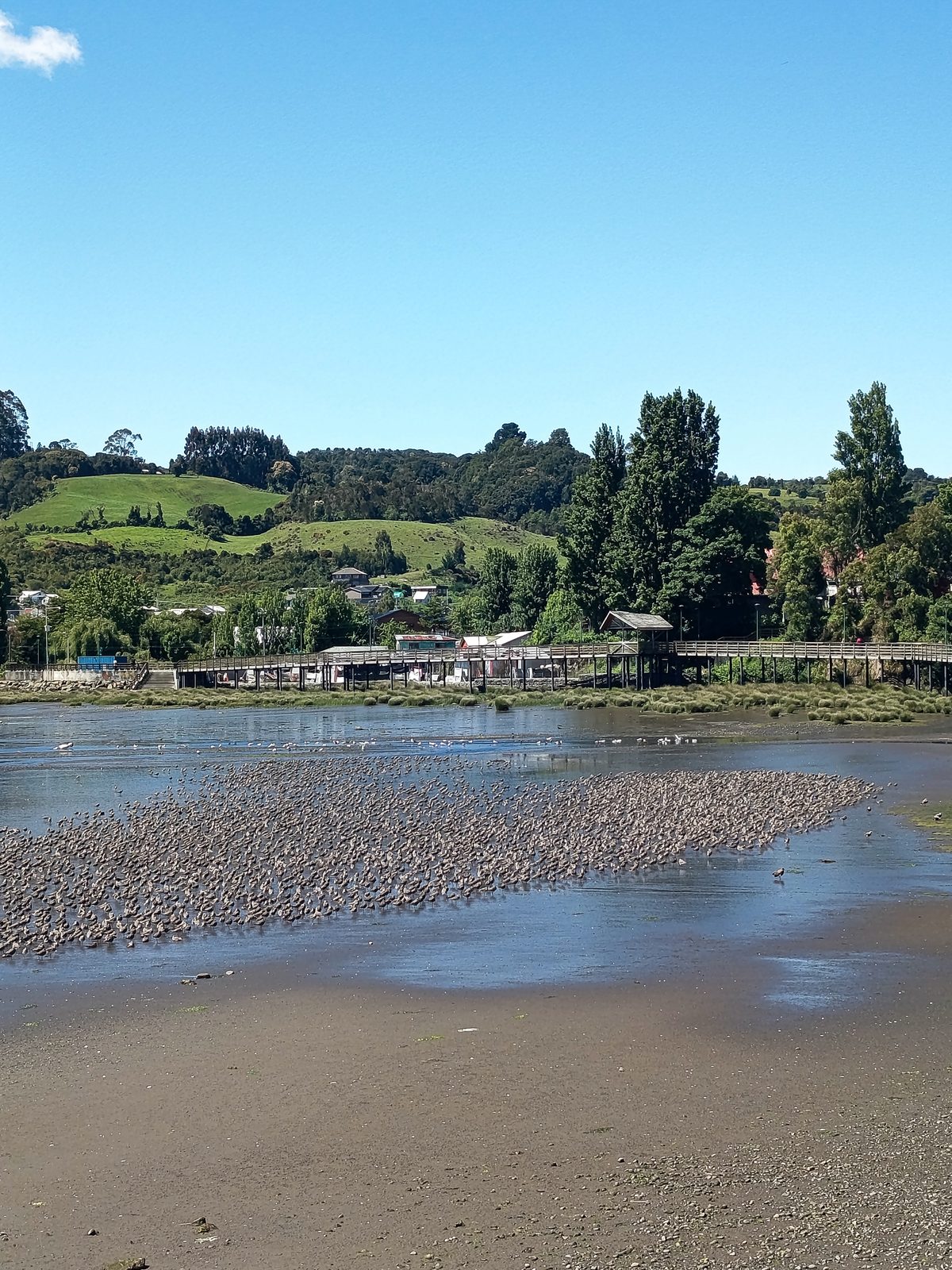
On October 28, 2026, the Bahía Curaco de Vélez Nature Sanctuary once again offered one of Chiloé's most impressive natural spectacles: thousands of Hudsonian Godwits (Limosa haemastica) gathered on its extensive intertidal flats after completing an extraordinary migration from Alaska, in the Northern Hemisphere.
Every spring, these birds return to southern Chile after breeding during the boreal summer in the subarctic regions of Alaska. They arrive mainly between September and November, when large flocks begin to occupy the wetlands of Maullín and Chiloé, where they stay until approximately April of the following year.
An Extraordinary Migration Connecting Two Hemispheres
Research carried out by Fundación Conservación Marina (FCM), by tracking godwits fitted with satellite transmitters, has revealed their migratory routes between Chiloé and Alaska in great detail.
The results, published by FCM (2022) in the scientific journal Ornitología Neotropical, showed that these birds can travel more than 31,000 kilometers during their annual migratory cycle.
On their northward journey, the tracked individuals made non-stop flights of more than 8,000 kilometers, crossing the Pacific Ocean from Chiloé to North America in about five days. They then continued on to their breeding grounds in Alaska.
On their way back south, the birds followed a different route, crossing parts of Canada, the United States, the Caribbean, and South America, using various wetlands to feed and regain energy before arriving back in Chiloé.
Curaco de Vélez: A Key Wetland for Thousands of Migratory Birds
The Bahía Curaco de Vélez Nature Sanctuary is one of the most important sites for the Hudsonian Godwit in southern Chile. Its intertidal flats offer abundant marine invertebrates, essential for feeding and for rebuilding the energy reserves of these birds.
At times, the bay can host concentrations of up to 5,000 godwits, which find in this small wetland the essential conditions to rest and feed during their stay in the Southern Hemisphere.
At the regional scale, an estimated 25,000 Hudsonian Godwits arrive each season in the Maullín–Chiloé migratory bird corridor, an extensive network of marine and estuarine wetlands that supports an exceptionally large share of the Alaskan breeding population.
FCM's satellite-tracking research also identified 25 important sites for this species in the Los Lagos Region, showing that godwit conservation depends on maintaining ecological connectivity between the region's different wetlands.
Protecting the Wetlands That Connect Continents
The arrival of these large flocks reminds us of the importance of conserving intertidal flats, maintaining food availability, and avoiding human disturbance during feeding and resting periods.
At Fundación Conservación Marina we continue to carry out scientific research, bird monitoring, and conservation actions in the nature sanctuaries and wetlands of the Maullín–Chiloé corridor, together with local communities and institutions.
Every godwit that returns from Alaska represents an extraordinary connection between ecosystems thousands of kilometers apart. Protecting Chiloé's wetlands directly contributes to the conservation of one of the most remarkable migrations on the planet.
Scientific References
Delgado, C., Espinosa, L., Pfeifer, A., Cárdenas, J. & Cursach, J. A. (2022). Ruta migratoria, fenología y sitios de parada del zarapito de pico recto (Limosa haemastica) durante su ciclo migratorio (2016–2017) entre Chiloé y Alaska. Ornitología Neotropical, 33, 21–28.
Delgado, C., Cursach, J. A., Espinosa, L., Pfeifer, A., & Cárdenas, J. (2022). Áreas de conservación para zarapito de pico recto Limosa haemastica durante temporada no reproductiva en el sur de Chile. Revista de Biología Marina y Oceanografía, 57(2), 102–111. https://doi.org/10.22370/rbmo.2022.57.2.3528
Fundación Conservación Marina. Maullín–Chiloé Migratory Bird Corridor and satellite tracking.