News
2026-07-21
2026-07-21
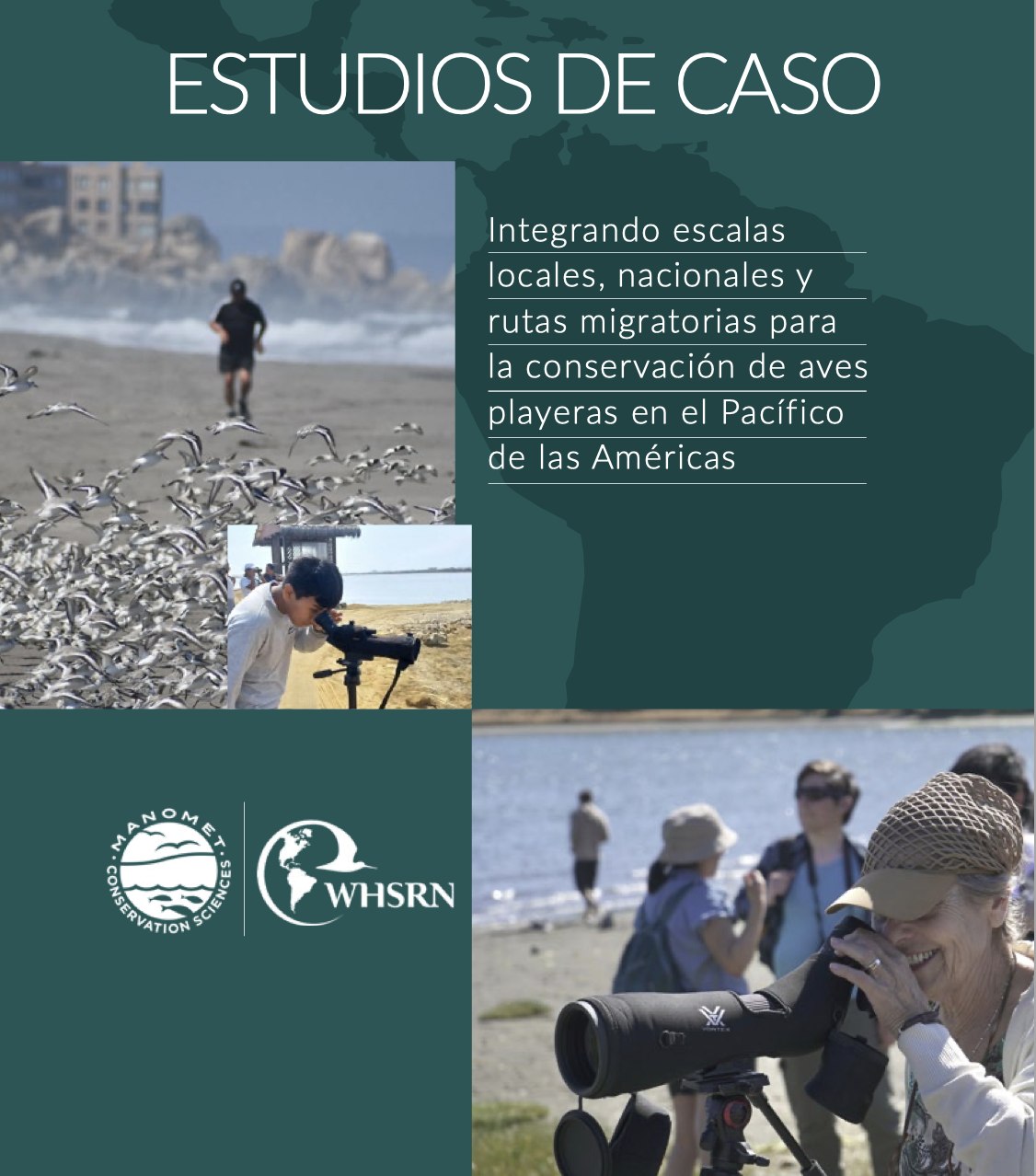
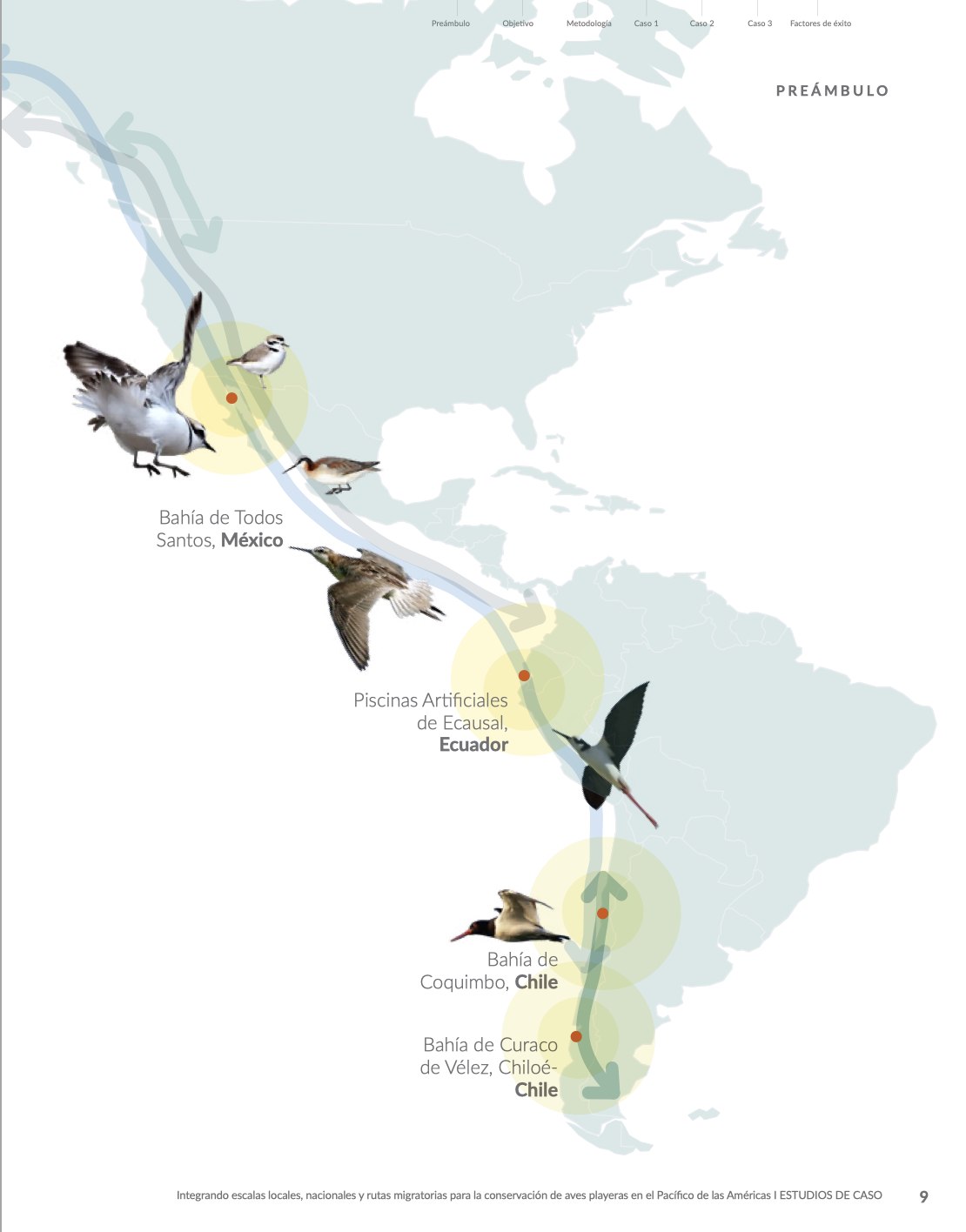
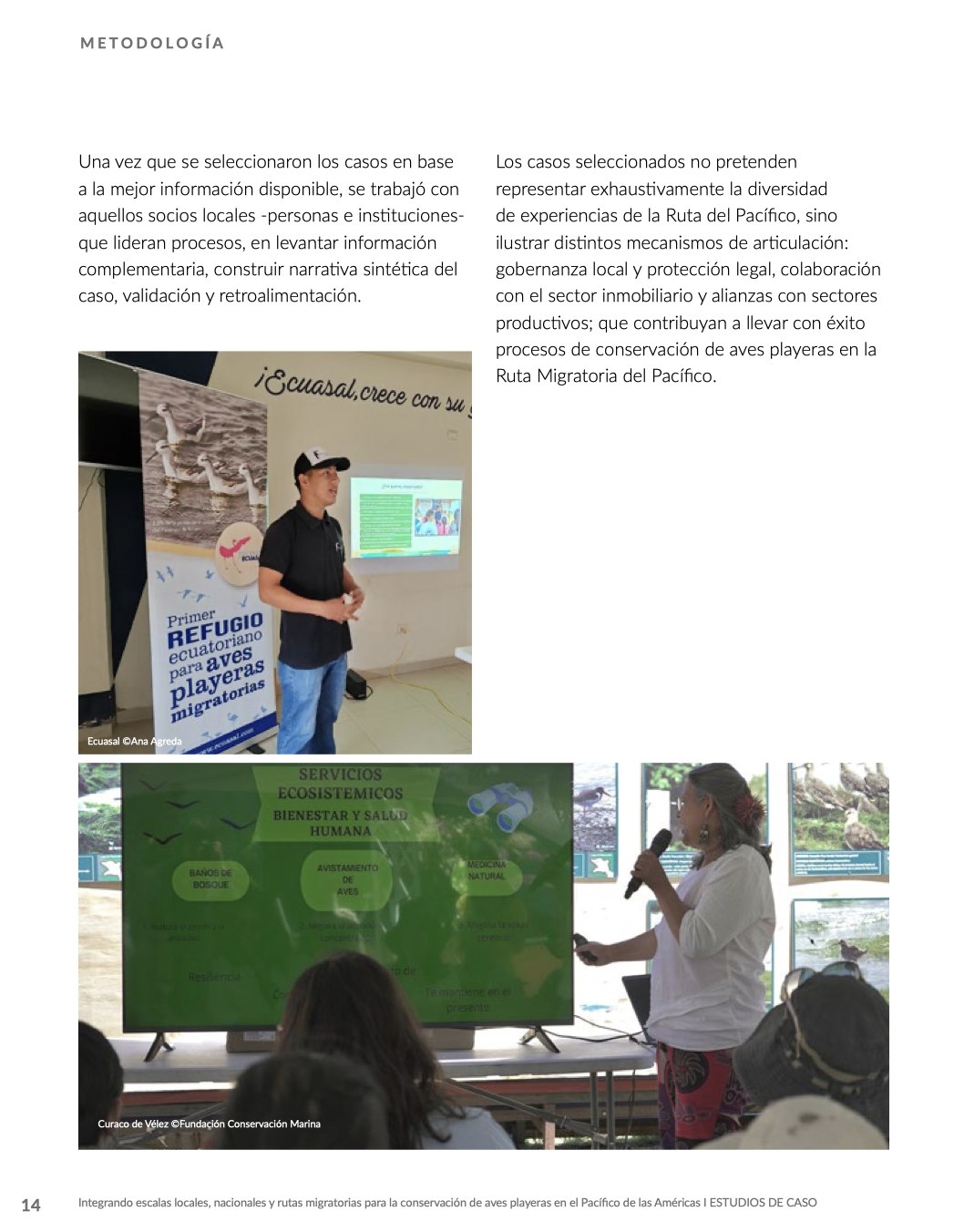
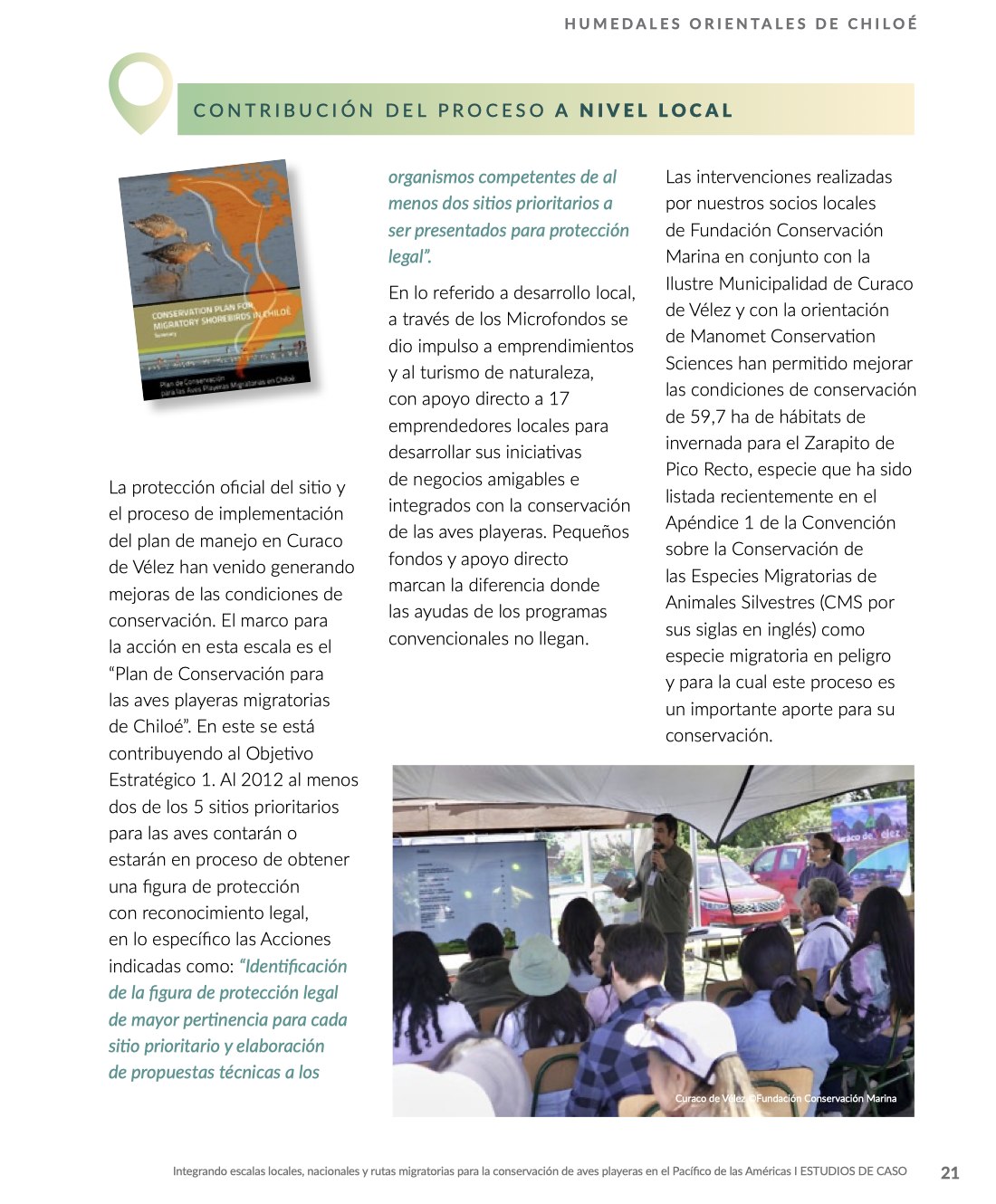
The conservation work led by Fundación Conservación Marina (FCM) in Curaco de Vélez Bay was featured in a new publication by Manomet Conservation Sciences on initiatives carried out along the Pacific Americas Flyway. The document, published in June 2026, presents three case studies aimed at understanding how local actions can contribute simultaneously to national and continental shorebird conservation goals.
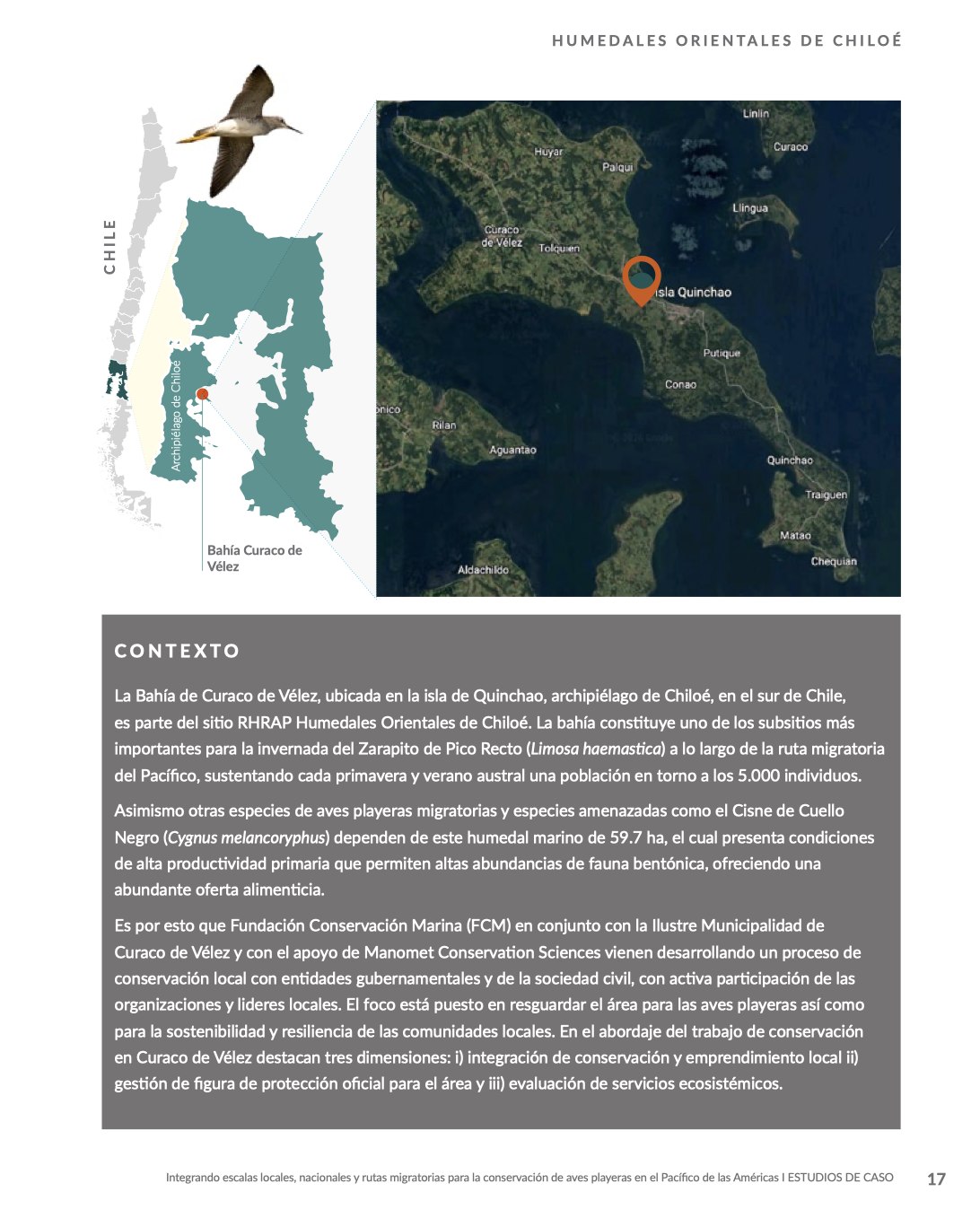
The Curaco de Vélez case is presented as an experience that integrates biodiversity protection, community participation, and local economic development. This bay, located on Quinchao Island, is part of the Eastern Chiloé Wetlands Western Hemisphere Shorebird Reserve Network (WHSRN) site and is one of the main wintering grounds for the Hudsonian godwit (Limosa haemastica) along the Pacific Flyway. During the austral spring and summer, the wetland supports a population of close to 5,000 individuals.
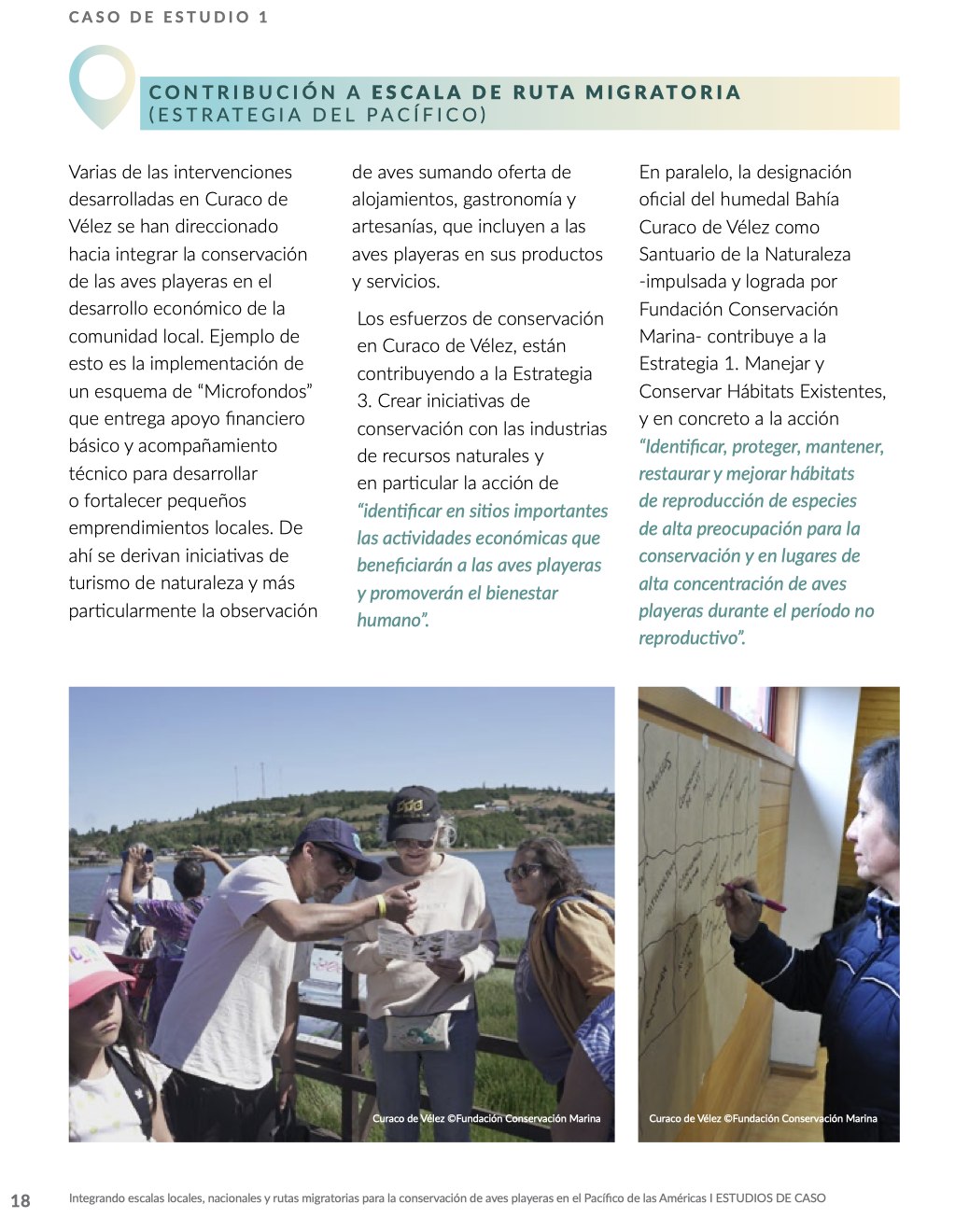
The publication highlights the work carried out by FCM together with the Municipality of Curaco de Vélez, with support from Manomet Conservation Sciences and the participation of public institutions, civil society organizations, and local stakeholders. This process has advanced three complementary areas: integrating conservation with local entrepreneurship, formally protecting the wetland, and conducting a participatory assessment of its ecosystem services.
Among the main results is the designation of 59.7 hectares as a Nature Sanctuary, a process promoted by FCM, along with the participatory development and subsequent implementation of its Management Plan. A study on the state and safeguarding of the sanctuary's ecosystem services was also carried out, incorporating community perceptions, future-scenario analysis, and the definition of measures to sustain the benefits the wetland provides.
The document also highlights the implementation of a micro-grant program that provided financial support and technical assistance to 17 local entrepreneurs. These initiatives strengthened activities related to nature tourism, birdwatching, lodging, gastronomy, and crafts.
The recognition of Curaco de Vélez Bay as a case study demonstrates that effective shorebird protection requires bringing together scientific knowledge, public management, local governance, and concrete opportunities for the communities that inhabit and conserve these ecosystems.